


March 2018. Virginia is the top overall seed. UMBC is a 16 seed nobody outside Baltimore has watched all year.
UMBC wins by 20.
Every survivor entry on Virginia that day was done before the second round. Five years later, Fairleigh Dickinson did the same thing to Purdue.
Those are the only two times it has happened in 160 tries. That is the thing about the tournament. The upsets are loud, the history is quiet, and the history is what wins survivor contests. Here is all of it, seed by seed and round by round.
Key findings by seed
History is kinder to favorites than March feels
By the numbers
- 98.8% — First-round win rate for 1 seeds against 16 seeds (158-2) (NCAA.com, 1985-2025)
- 35.6% — How often a 12 seed beats a 5 seed (57 of 160 games) (NCAA.com, 1985-2025)
- 83-77 — 9 seeds' first-round record against 8 seeds, the only matchup the lower seed leads (NCAA.com, 1985-2025)
- 66.9% — Share of 1 seeds that reached the Elite Eight (107 of 160) (Sports-Reference brackets, 1985-2025 (40 tournaments))
- 26 of 40 — National titles won by 1 seeds (NCAA.com, 1985-2025)
- 6.25 — Average first-round upsets per tournament, not counting 8 vs 9 games (Sports-Reference brackets, 1985-2025 (40 tournaments))
The short version of four decades of March Madness statistics:
- The top two seed lines almost never lose in the first round. 1 seeds are 158-2. 2 seeds are 149-11.
- The 5 vs 12, 6 vs 11 and 7 vs 10 games are close to coin flips with a lean. The higher seed wins about 61% to 64% of the time.
- The 8 vs 9 game is a true toss-up, and the 9 seed actually leads.
- 1 seeds win 86.1% of their second-round games, 78.7% in the Sweet 16 and 61.7% in the Elite Eight. The deeper they go, the less safe they get.
- Every tournament since 1985 has had at least two first-round upsets. The most was 10, in 2016.
For a March Madness survivor pool, that adds up to one idea. The first round is the safest pick you will ever get. The trick is spending it on the right team.
Where the seed records come from
Official records, checked game by game
The sample is every men's NCAA tournament from 1985, the first year of the 64-team bracket, through 2025. The 2020 tournament was canceled, so that is 40 tournaments and 160 teams on every seed line.
Overall records and first round matchup records come from NCAA.com's NCAA records for every seed, published after the 2025 tournament.
NCAA.com does not break records out by round, so we built that part ourselves. We pulled all 40 bracket pages from Sports-Reference's college basketball site, recorded the seed of every team in every game and counted wins, losses and advancement by round. Our totals match NCAA.com's on every seed line and every first-round matchup, which is a good sign nothing slipped.
Definitions we used:
- First round means the round of 64. First Four games are not counted.
- Second weekend means the Sweet 16 and Elite Eight.
- Final weekend means the Final Four and title game.
- Upset means a team seeded two or more lines lower beat the higher seed. 8 vs 9 games are left out.
One footnote from March Madness history: Oregon's 2021 first-round game against VCU was declared a no contest under COVID-19 protocols. Oregon advanced, but neither team gets a win or a loss.
This is the men's tournament only. Women's tournament records are not included.
First round records by seed matchup
Eight matchups, eight different risks
March Madness seeds are built to make the first round lopsided. Mostly, it works.
First-round records by seed matchup, 1985-2025 (NCAA.com)
| Matchup | Higher seed record | Higher seed win rate | Upsets |
|---|---|---|---|
| 1 vs 16 | 158-2 | 98.8% | 2 |
| 2 vs 15 | 149-11 | 93.1% | 11 |
| 3 vs 14 | 137-23 | 85.6% | 23 |
| 4 vs 13 | 127-33 | 79.4% | 33 |
| 5 vs 12 | 103-57 | 64.4% | 57 |
| 6 vs 11 | 98-62 | 61.3% | 62 |
| 7 vs 10 | 97-62 | 61.0% | 62 |
| 8 vs 9 | 77-83 | 48.1% | 83 |
The 7 vs 10 line is out of 159 games because of the 2021 no contest. Across all 40 tournaments, NCAA tournament upsets in the first round averaged 6.25 a year, from a low of 2 in 2007 to a high of 10 in 2016.
Top seeds vs the bottom of the bracket
Two losses in 160 tries
A 1 seed losing in the first round has happened twice: UMBC over Virginia in 2018 and Fairleigh Dickinson over Purdue in 2023.
2 seeds are almost as safe at 93.1%. 3 seeds drop to 85.6%, which means a 14 seed wins about once every seven games. The 4 vs 13 game is where it starts to feel real: 13 seeds have won 33 times, about one game in five.
Read it as a survivor player would. Moving from a 1 seed to a 4 seed in round one adds roughly 19 points of risk to your pick.
The classic upset matchups
Where the bracket actually breaks
The 5 vs 12 game has the reputation, and it earns it. 12 seeds have won 57 of 160, or 35.6%.
The 6 vs 11 and 7 vs 10 games are just as shaky. Higher seeds win only 61.3% and 61.0% of those. 11 seeds have also made six Final Fours, as many as 8 seeds and more than the 6, 7, 9 or 10 lines.
And the 8 vs 9 game is not an upset at all. The 9 seed leads 83-77. If you're picking that game in a survivor contest, you're picking a coin flip.
How seeds fare in later rounds
Top seeds fade, but they're still standing
In an NCAA survivor pool, later rounds are where you run out of teams. The table shows how often each seed gets far enough to be a pick at all.
Teams reaching each round by seed, out of 160 per seed, 1985-2025
| Seed | Sweet 16 | Elite Eight | Final Four | Titles |
|---|---|---|---|---|
| 1 | 136 (85.0%) | 107 (66.9%) | 66 (41.3%) | 26 |
| 2 | 102 (63.8%) | 72 (45.0%) | 32 (20.0%) | 5 |
| 3 | 84 (52.5%) | 41 (25.6%) | 17 (10.6%) | 4 |
| 4 | 77 (48.1%) | 25 (15.6%) | 15 (9.4%) | 2 |
| 5 | 55 (34.4%) | 12 (7.5%) | 9 (5.6%) | 0 |
| 6 | 47 (29.4%) | 17 (10.6%) | 3 (1.9%) | 1 |
| 7 | 29 (18.1%) | 10 (6.3%) | 3 (1.9%) | 1 |
| 8 | 16 (10.0%) | 9 (5.6%) | 6 (3.8%) | 1 |
| 9 | 8 (5.0%) | 5 (3.1%) | 2 (1.3%) | 0 |
| 10 | 25 (15.6%) | 9 (5.6%) | 1 (0.6%) | 0 |
| 11 | 27 (16.9%) | 10 (6.3%) | 6 (3.8%) | 0 |
| 12 | 22 (13.8%) | 2 (1.3%) | 0 | 0 |
| 13 | 6 (3.8%) | 0 | 0 | 0 |
| 14 | 2 (1.3%) | 0 | 0 | 0 |
| 15 | 4 (2.5%) | 1 (0.6%) | 0 | 0 |
| 16 | 0 | 0 | 0 | 0 |
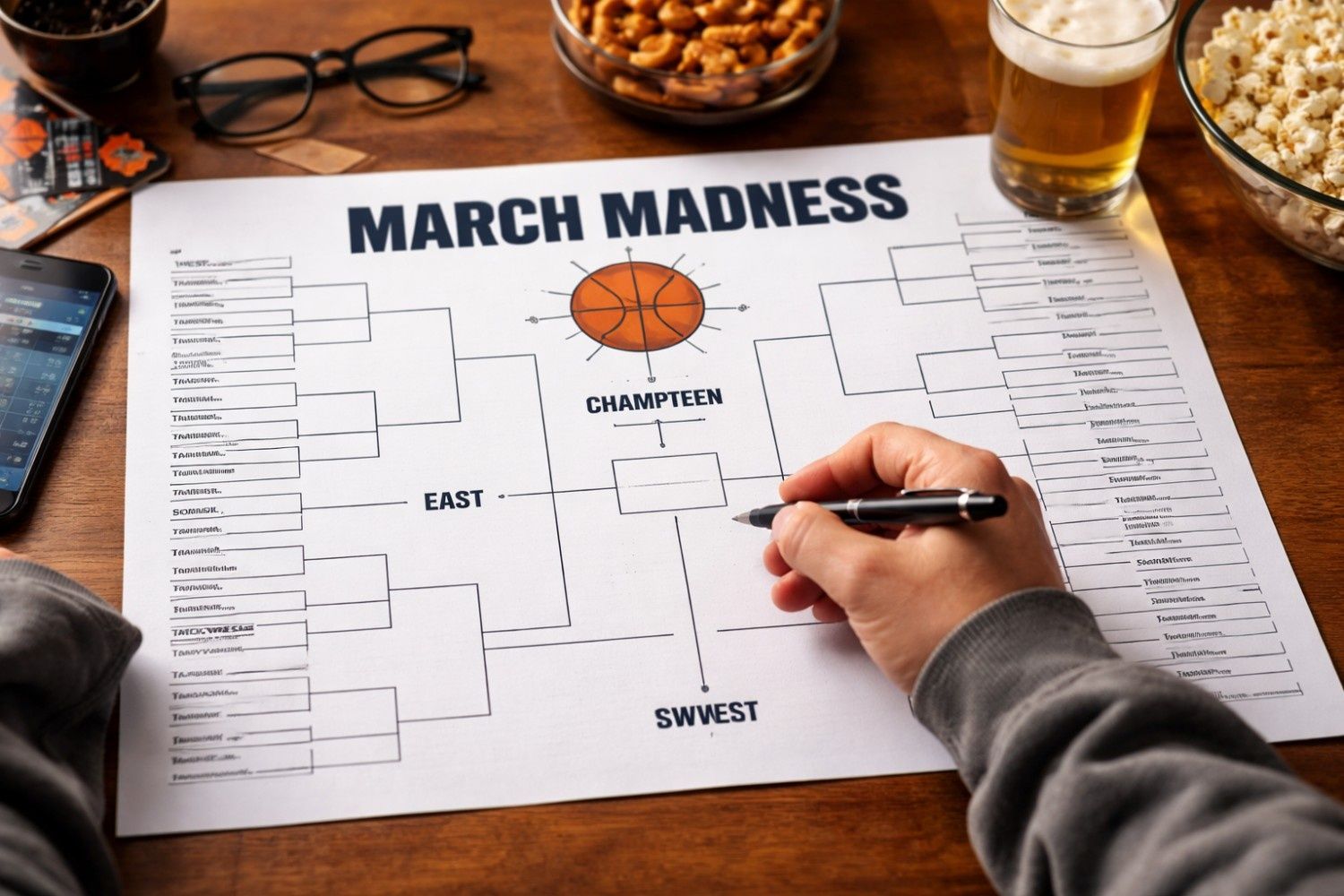
Source: our count of Sports-Reference brackets; titles match NCAA.com. If you're still filling out a paper bracket alongside your survivor entry, here are some printable bracket alternatives.
Second weekend survival rates
The Sweet 16 sorts the contenders
Once the second weekend starts, seed lines spread out fast.
1 seeds win 78.7% of their Sweet 16 games (107-29) and 61.7% of Elite Eight games (66-41). 2 seeds hold up well in the Sweet 16 at 70.6%, then fall to 44.4% in the Elite Eight, usually because a 1 seed is waiting.
3 seeds win 48.8% of Sweet 16 games. 4 seeds win just 32.5%, since most of them meet a 1 seed there. Double-digit seeds averaged 2.15 Sweet 16 spots per tournament. Only 1995 and 2007 had none.
Sweet 16 win rate by seed, 1985-2025
| Sweet 16 win rate by seed, 1985-2025 | Value |
|---|---|
| 1 seed (107-29) | 78.7% |
| 2 seed (72-30) | 70.6% |
| 3 seed (41-43) | 48.8% |
| 11 seed (10-17) | 37.0% |
| 4 seed (25-52) | 32.5% |
| 5 seed (12-43) | 21.8% |
Source: Sports-Reference brackets, 1985-2025 (40 tournaments)
Which seeds reach the final weekend
Mostly 1s & 2s, with room for chaos
1 seeds have filled 66 of the 160 Final Four spots since 1985, 41.3%. Add 2 seeds and the top two lines take 61.3%.
All four 1 seeds made the Final Four only twice, in 2008 and 2025. None made it in 2006, 2011 and 2023.
Once there, 1 seeds win 62.1% of semifinals and 63.4% of title games. The final weekend is the closest thing to even the tournament gets.
March Madness upsets & survivor pool picks
You choose which upset can hurt you
March Madness upsets get the headlines. In survivor, they only matter if you're on the wrong side of one.
That is the advantage over a bracket. A bracket makes you pick every game. A survivor entry makes you pick one, and you choose which.
The data says where the danger sits:
- Lowest risk: 1 and 2 seeds in round one, at 98.8% and 93.1%.
- Manageable risk: 3 and 4 seeds in round one, at 85.6% and 79.4%, and 1 seeds in round two, at 86.1%.
- Real risk: anything in the 5 through 7 lines, where the higher seed wins only about 61% to 64% of first-round games.
- Coin flip: the 8 vs 9 game. Elite Eight games are not far off, since even 1 seeds win only 61.7% of them.
Good survivor pool picks also account for the crowd. If half your contest is on the same 2 seed, a 15 seed winning knocks out half the field. That is bad news only if you're in that half. Our guide to leveraging tournament matchups goes deeper on reading individual games.
Here is the flip. The upset you fear most, a 1 seed losing on day one, is the one that almost never happens. The one that should scare you is the 5 vs 12 game everyone thinks they've figured out.
Use the data in your March Madness survivor strategy
Spend safety early, save it for later
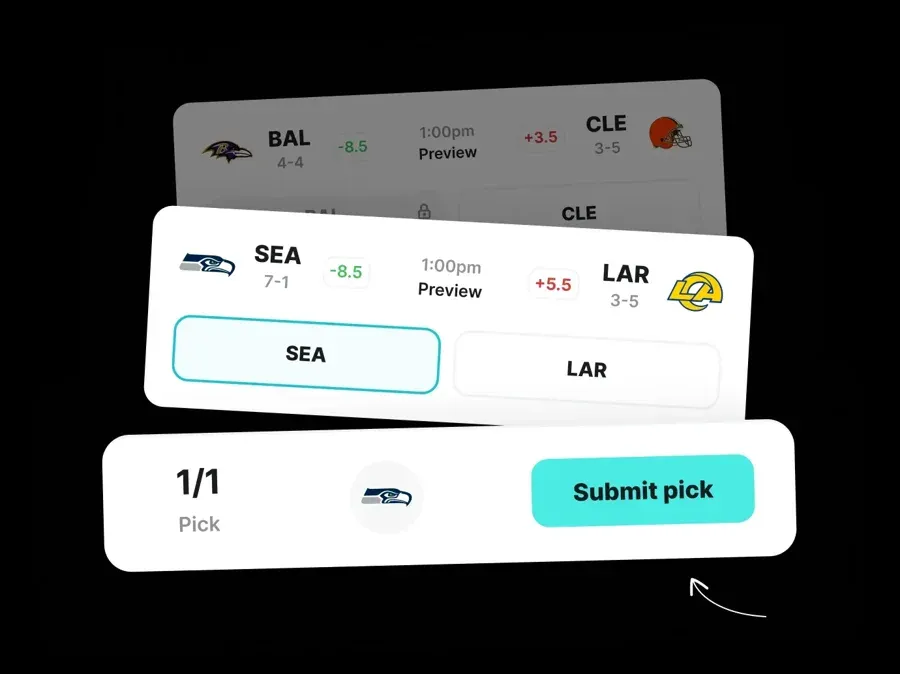
In Splash's March Madness survivor format, you pick one team each day, you can't reuse a team, and if more than one entry survives the championship, the prize is split evenly. That makes every early pick a trade-off.
Use a 1 seed in round one and you get a 98.8% pick. You also lose the team most likely to still be playing late: 66.9% of 1 seeds reach the Elite Eight, against 25.6% of 3 seeds.
A balanced March Madness survivor strategy, based on these numbers:
- Day one and two: lean on 2, 3 and 4 seeds in good matchups. Keep at least two 1 seeds unused if you can.
- Second round: 1 seeds win 86.1% here, so this is where one of them can earn its spot.
- Second weekend: expect your options to be mostly 1, 2 and 3 seeds. They have filled about half of all Sweet 16 spots.
- Final weekend: even 1 seeds win only about 62% to 63% of games here, so whoever still has a usable team has the edge.
- Skip the trendy 12 seed. A 35.6% win rate is a great bracket story and a bad survivor pick.
For the full format and day-by-day planning, read our March Madness survivor guide. When you're ready, set up a contest for your group in the Splash Survivor game. It's peer-to-peer, so you play against friends and other fans, not the house. NCAA contests aren't available in every Splash state, so check where you can play first.
Pick carefully. Plan ahead. Stay alive.
Frequently asked questions
Quick answers, straight from the records
Almost never. 1 seeds are 158-2 against 16 seeds from 1985 through 2025, a 98.8% win rate. The two losses were Virginia to UMBC in 2018 and Purdue to Fairleigh Dickinson in 2023. 2 seeds are 149-11, so they lose about once every 15 games.
Leaving out the 8 vs 9 game, where the 9 seed leads 83-77, the 6 vs 11 and 7 vs 10 games have produced the most upsets, with 62 each. The 5 vs 12 game is close behind at 57. In all three, the higher seed wins only about 61% to 64% of the time.
Usually, yes, at least some of them. 1 seeds win 98.8% in round one, but 2, 3 and 4 seeds also win 79% to 93% there. 1 seeds are far more likely to still be alive in the Elite Eight, where your options run thin. Spending one in round two, at 86.1%, is a reasonable middle path.
Twice since 1985, in 2008 and 2025. On average, 1 seeds have taken 41.3% of Final Four spots. Three tournaments, 2006, 2011 and 2023, had no 1 seed in the Final Four at all, so don't plan your final weekend around all four top seeds being there.
A bracket asks you to pick every game before the tournament starts. Survivor asks you to pick one team to win each day, and you can't reuse a team. One upset can wreck a bracket. In survivor, an upset only hurts if it's the game you picked.