



In the fast-evolving world of sports entertainment and online gaming, a unique opportunity has emerged for avid sports fans and gamers to earn a steady income year-round by hosting contests. This approach allows players to engage with various sports leagues and tournaments, including MLB, NBA, NHL, NFL, College Football, March Madness, and PGA, providing an income stream while immersing themselves in a dynamic, ever-changing gaming landscape.
Diverse Game Types to Suit Every Preference
Hosts have the flexibility to choose from three distinct game types: season-long, weekly-long, and daily contests. This comprehensive range accommodates all types of players, from those who relish the long-term strategy of season-long leagues to those who prefer the fast-paced excitement of daily matchups.
With sports leagues spanning different times of the year, such as the MLB from March to October, the NBA from October to June, and PGA tournaments throughout most months, there's always an exciting event to host and participate in.
The Commissioner Economy: A Lucrative Opportunity
Central to the hosting model is the Commissioner Economy, a system designed to reward hosts for their efforts and engagement. The system operates on a simple principle: the more participants and higher entry fees a hosted contest attracts, the more the host stands to earn. This dynamic structure encourages hosts to create appealing contests that attract a wide audience, boosting their earning potential.
Sequential Hosting for Consistent Income
There are strategies for maintaining consistent income by hosting games sequentially or on a recurring basis, emphasizing the importance of regular engagement and scheduling. One unique feature of this earning model is the ability to host consecutive contests. By leveraging the sporting calendar and participating in year-long contests across different sports, hosts can maintain a consistent stream of income throughout the year. This strategy maximizes earnings by capitalizing on the varied sports seasons and the fan engagement they bring.
Unlocking Earnings Potential Through Diversity
Diversification is key to success in this arena. Hosting contests across all three game types, seasonal, weekly, and daily, allows hosts to tap into a broader range of participants' preferences. By catering to various gaming appetites, hosts can increase their chances of attracting more players and, consequently, boost their income potential.
Becoming a Host: The Initiation Period
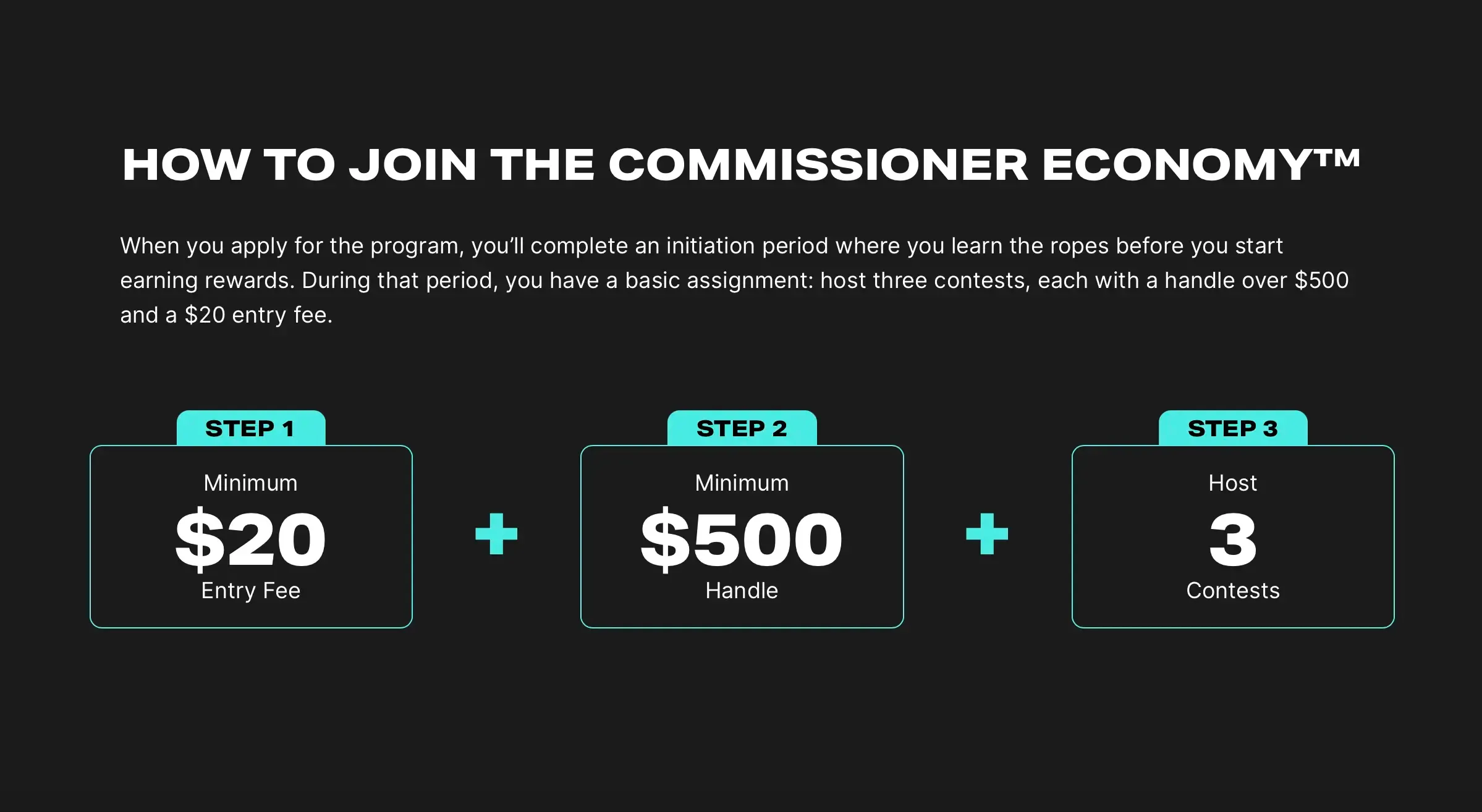
To become a host and start reaping the benefits of this innovative earning opportunity, interested individuals must first complete an initiation period. During this phase, potential hosts are required to organize and host three contests with minimum entry fees of $20 and handle entries exceeding $500.
This initiation period helps hosts familiarize themselves with the product, understand the hosting process, and set the stage for their future earning potential.
The world of sports entertainment and online gaming has opened up an exciting avenue for enthusiasts to earn money year-round by hosting games. With a range of game types, an incentivizing Commissioner Economy, and the potential for sequential hosting across diverse sports leagues, this model offers a dynamic and lucrative income source for those willing to dive in.
Marketing and User Engagement Approaches
A strong marketing plan can make a hosted game far more successful by bringing in new players and keeping them engaged throughout the season. Influencer partnerships are especially effective because they let hosts reach established audiences that already trust the creator’s recommendations. A well-matched influencer can showcase the contest format, explain why it is fun, and create excitement around signing up. Cross-promotion is another high-impact tactic. Hosts can work with related communities, brands, or game organizers to promote each other’s contests, helping expand reach without starting from scratch.
Social media campaigns also play a major role in user acquisition and engagement. Regular posts on platforms like X, Instagram, Facebook, or TikTok can highlight upcoming contests, winners, limited-time bonuses, or seasonal themes. Short videos and behind-the-scenes updates can all help build anticipation and encourage repeat participation. Hosts can also use social media to remind players when new contests open, which is useful for hosting that runs on a recurring or sequential schedule. To keep engagement high, promotional content should do more than advertise availability. It should give players a reason to care by emphasizing prizes, social competition, exclusivity, or the fun of participating with friends. Coordinating promotions across multiple channels can reinforce the message and create more touchpoints with potential players. The most effective campaigns are consistent and easy to share, so they can attract new users while also reminding existing players to return for the next contest.
Game Monetization Strategies
Hosted games can generate more than entry-fee revenue when hosts use multiple monetization methods. The strongest results usually come from combining direct purchases and player-driven incentives. That mix helps you earn from different player segments without relying on a single source of income. Below is a structured list of monetization approaches you can add to the article:
- Use In-App Purchases to Create Premium Value: In-app purchases let hosted games earn from players who want a better experience, faster progress, or exclusive content. You can offer premium entry tiers, bonus rounds, cosmetic upgrades, or unlockable features that increase perceived value without changing the core game.
- Add Rewarded Ads for Non-Paying Players: Rewarded ads offer players a low-friction way to support the game while earning a useful benefit. Players might watch an ad to gain extra lives, entry credits, boosts, or bonus points. This method works well because it does not interrupt gameplay as abruptly as other ad formats. It also helps hosts monetize a broader audience, including players who are interested in the game but not ready to spend money directly.
- Run Special Events That Encourage Extra Spending: Special events can create urgency and increase revenue by giving players a reason to engage more often. Hosts can use limited-time tournaments, holiday contests, leaderboard challenges, or bonus prize events to spark interest. These events often work best when paired with exclusive rewards or temporary upgrades that expire after the event ends. That sense of scarcity can motivate more participation and repeat visits throughout the year.
- Offer Incentivized Actions That Unlock Revenue: Incentivized actions help hosted games earn more by rewarding players for behaviors that support growth and monetization. Examples include sharing the contest, inviting friends, completing missions, or watching sponsor content. Such actions can be tied to in-game currency or exclusive perks.
- Combine Monetization Methods for Stronger Total Earnings: The best revenue strategy typically combines multiple monetization methods rather than relying on a single one. A hosted game can use in-app purchases for high-value players, rewarded ads for casual players, and special events to drive seasonal spikes. Incentivized actions can add another layer of engagement and retention. These methods enable hosts to earn from different audience segments and maximize revenue throughout the full game cycle, not just during launch or peak activity periods.
Hosted games become more profitable when monetization is built into the experience in a balanced way. By mixing purchases and incentives, hosts can create more earning opportunities while keeping players engaged. This makes the article more complete and more directly focused on maximizing revenue from hosted games year-round.
Analytics and Revenue Optimization
Tracking player behavior and revenue is one of the most effective ways to improve income outcomes from hosted games, because it replaces guesswork with evidence. When hosts pay attention to how players discover a contest, sign up, stay active, and stop participating, they can see which parts of the experience create value and which weaken it. Revenue data matters just as much. By comparing entry fees and total earnings across different contests, a host can identify which formats, price points, and time windows are producing the strongest financial returns.
That makes it possible to optimize monetization in a targeted way instead of applying the same approach everywhere. For example, if analytics show that a certain contest type attracts more repeat players but lower average revenue, the host can test changes to pricing or timing to improve profitability without hurting engagement. If another contest brings in fewer players but higher-value ones, the host can focus more promotional effort there or create similar contests that appeal to that segment. Analytics also help reveal patterns in player behavior that are easy to miss without data, such as seasonal spikes and the difference between casual participants and high-value regulars. These insights make it easier to design contests that keep players engaged while increasing lifetime value over time. Just as important, tracking results over time helps hosts evaluate whether monetization changes are actually working.
A new pricing model, incentive structure, or contest format may look promising at first, but only performance data can show whether it truly improves revenue outcomes. Hosts can adjust more quickly, reduce wasted effort, and focus on the strategies that deliver measurable gains. In a year-round hosting model, that kind of ongoing optimization is especially valuable because it turns every contest into a learning opportunity. The more a host understands player behavior and revenue performance, the better they can refine their approach, improve monetization efficiency, and build a more reliable income stream across the full sporting calendar.
By embracing the opportunity to engage with sports fans and gamers in a unique way, hosts can enjoy both financial rewards and the thrill of being at the center of the action. Make your Splash!