



Starting a March Madness pool can be a fun and engaging way to enjoy the NCAA tournament with friends, family, or colleagues. As the tournament approaches each year, understanding the different pool formats and how they’ve evolved is key to creating a better experience.
Today, formats go far beyond traditional brackets. With the rise of Survivor-style contests and digital platforms, there are now more ways than ever to organize, compete, and stay engaged throughout the tournament.
Contests to Join in 2026
If you're looking to go beyond running your own pool, several large-scale contests are already available this year — especially in Survivor formats, which continue to grow rapidly.
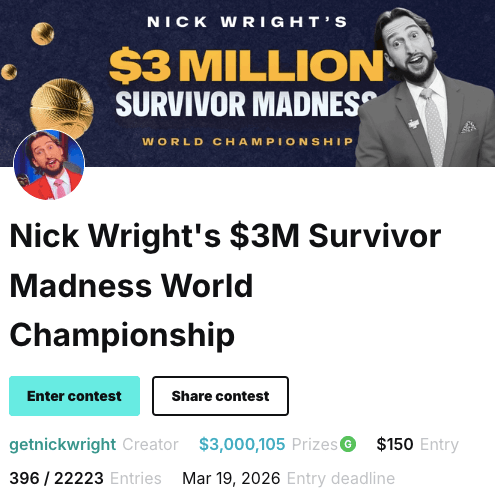
Nick Wright’s $3M Survivor Madness World Championship - One of the largest Survivor contests available, this competition features over $3 million in total prizes and has already attracted hundreds of entries with space for more than 22,000 participants. With a $150 entry fee and a March 19 deadline, it offers a massive field where long-term strategy and planning are critical.
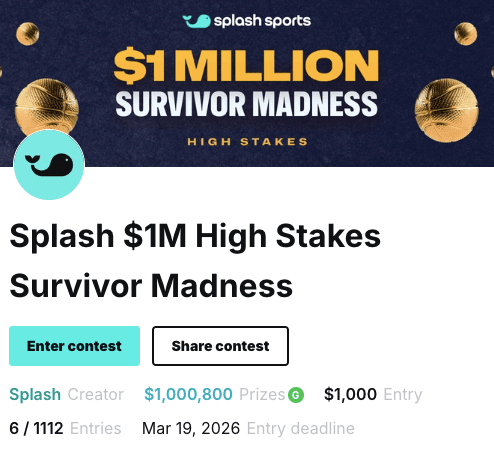
Splash $1M High Stakes Survivor Madness - Designed for experienced competitors, this contest features over $1 million in total prizes and a $1,000 entry fee. The smaller field size creates a different dynamic, where strong decision-making and careful planning carry more weight throughout the tournament.
Comparison of Tournament Pool Formats
When deciding which format works best for your group, it’s important to understand how each option plays differently. The most common formats include traditional brackets, Survivor contests, and squares.
Traditional Bracket Pools Explained
A traditional bracket pool involves participants predicting the winner of every game before the tournament begins.
This format remains popular because:
- It’s simple to understand
- It rewards long-term predictions
- It keeps everyone involved early
However, once games begin, entries are locked. A few early surprises can quickly derail even the most well-researched bracket.
If you're comparing formats, check out NCAAB Survivor vs Traditional Brackets to understand how strategies differ.
The Dynamics of a Survivor Pool
Survivor contests have become one of the fastest-growing formats.
Instead of filling out a full bracket, participants:
- Pick one team per tournament day
- Advance if the team wins
- Are eliminated if the team loses
- Cannot reuse teams
This creates a deeper strategic challenge, where every decision impacts future options.
For daily guidance, many players follow NCAAB Survivor Picks to help navigate matchups and plan ahead.
Exploring Squares Formats
Squares contests use a 10x10 grid tied to game scores, where outcomes are determined by final score digits.
This format is:
- Easy to join
- More luck-driven
- Popular in casual settings
While accessible, it doesn’t offer the same level of strategy as brackets or Survivor contests.
Organizing and Launching a Tournament Pool
Running a successful pool comes down to clarity, structure, and choosing the right format.
Step-by-Step Guide
1. Choose Your Format
Decide whether you’re running a bracket, Survivor contest, or multiple formats.
2. Set the Entry Fee
Determine if your pool will include an entry fee or remain free. Be clear upfront.
3. Invite Participants
Send clear instructions with rules, deadlines, and how to join.
4. Establish Rules
Define scoring, tiebreakers, and deadlines before the tournament begins.
5. Use Digital Tools
Avoid printable sheets — digital platforms simplify tracking and improve the experience.
Tools and Platforms for Pool Management
Modern platforms make managing pools significantly easier:
- Automatic scoring
- Live standings
- Easy group setup
- Mobile access
Some formats, like NCAAB Pick'em, allow daily selections instead of locking everything in upfront, giving participants more flexibility.
Managing the Pool Experience
Tracking Scores and Progress
Real-time updates help maintain engagement. Participants can follow standings and stay invested throughout the tournament.
Managing Prizes and Distribution
Clear communication is key:
- Define how rewards are distributed
- Share details before the tournament
- Use reliable payment methods
- Keep records for transparency
Compliance and Fair Play
Ensure your contest aligns with local regulations. Requirements can vary depending on location, so maintaining clear and fair rules is essential.
Keeping Participants Engaged
Engagement can drop after early rounds unless you actively maintain it.
Ways to keep interest high:
- Share leaderboard updates
- Highlight key moments
- Create group discussions
- Host watch parties
Why Formats Are Evolving in 2026
Participation is shifting:
- Survivor contests are growing rapidly
- Daily formats are gaining traction
- Digital platforms are replacing paper
These changes are driven by one thing: keeping players engaged longer.
Final Thoughts
Running a tournament pool today is about more than just filling out a bracket.
It’s about:
- Choosing the right format
- Using the right tools
- Keeping participants engaged
With formats like Survivor and Pick’em continuing to grow, there are more ways than ever to compete and stay involved throughout the tournament.
And if you’re looking for large-scale competitions, the contests above offer some of the best opportunities available in 2026.